

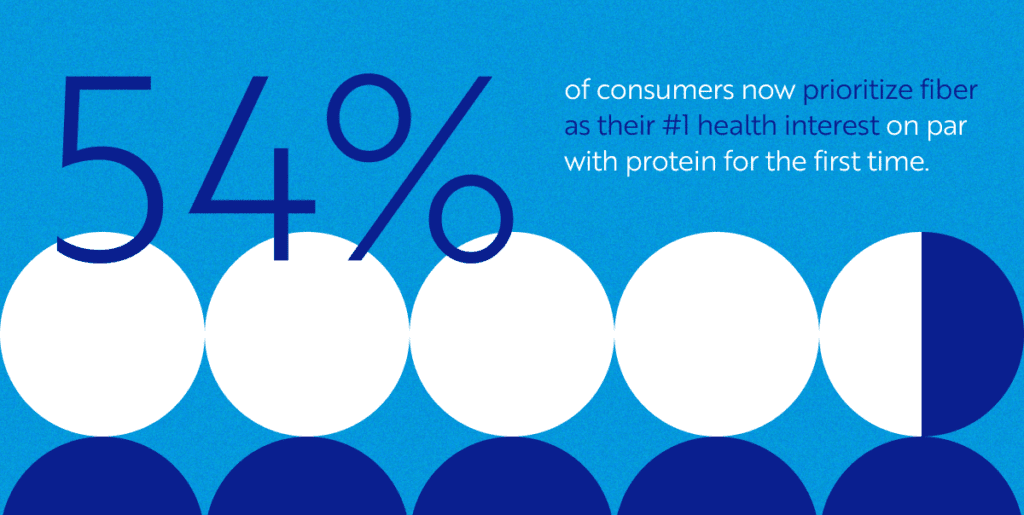
For years, protein was the “gold standard” for functional snacks, driving billions of dollars into “protein-boosted” innovation. But as we move through 2026, a new nutrient is stealing the scene: Fiber. The shift is backed by staggering data: 64% of consumers are now intentionally seeking fiber to bridge the “fiber gap,” with only 5% of Americans currently meeting the recommended daily intake. What was once viewed as a humble digestive aid has been rebranded by a new generation as “Fibermaxxing”, a holistic tool for gut health, metabolic wellness, and sustained energy.
The GLP-1 Catalyst
This trend is not emerging in isolation. It is being accelerated by a broader shift in the pharmaceutical landscape. The rise of GLP-1 medications has fundamentally changed dietary priorities. Because fiber naturally supports the same satiety signals targeted by these treatments, consumers are increasingly gravitating toward foods that offer a natural pathway to appetite control and metabolic balance.
For CPG brands, this marks an important transition: the industry is moving from subtraction to addition.
Instead of simply reducing fat, sugar, or sodium, companies are now competing to add meaningful functionality to everyday foods.
The R&D paradox: Health vs. Sensory appeal
For R&D teams, however, this shift introduces a familiar but complex challenge: how to deliver higher nutritional value without compromising the sensory experience consumers expect.
Fiber fortification, in particular, presents several technical hurdles:
- Textural friction – creating gritty or chalky mouthfeel
- Flavor distortion – masking delicate flavor profiles or introducing bitterness
- Processing challenges – altering dough rheology, moisture balance, and product stability
Traditionally, solving these issues meant adding “masking” ingredients, lengthening the label and slowing down the R&D cycle.
A new era of formulation tools
Introducing fiber is just one of the many challenges R&D teams face in an evolving landscape where health is becoming a central driver of consumer choice.
As nutritional expectations grow more sophisticated, the tools used to solve formulation challenges must evolve as well.
At MicroSalt®, we believe that the future of food innovation will rely on ingredient technologies that deliver meaningful health improvements without compromising taste, texture, or manufacturing efficiency.
Because ultimately, the products that succeed in the market will be the ones that make healthier choices effortless for both manufacturers and consumers.

The protein-processing paradox
High-protein snacks are surging, but concerns over “ultra-processed” labels are creating a new innovation challenge. Read more.
Fiber’s new frontier
As CPGs rush to add fiber to snacks, balancing mineral content and flavor remains a priority for buyers. Read more.

Snacks: between functional & tasty
While 67% of consumers choose foods for health benefits, many remain skeptical that “healthy” indulgence can truly deliver on flavor. Read more.