



Mexico’s front-of-pack warning label regulation (NOM-051) was approved in 2019 and implemented in 2020, introducing clear black octagons on packaged foods that exceed limits for sodium, sugar, saturated fat, trans fat, or calories. The objective was simple: give consumers immediate visibility into the nutritional risks of everyday products. Within months, the law reshaped packaging design and placed transparency at the center of the national conversation around food reformulation.
The regulation pushed manufacturers to adjust formulations to reduce the number of warning seals appearing on their products. Sodium and sugar reductions became priority areas, driven by both compliance needs and retailer pressure. Categories such as snacks, bakery, and beverages saw accelerated efforts, as brands recognized that cleaner labels translated directly into better shelf performance and stronger consumer trust.
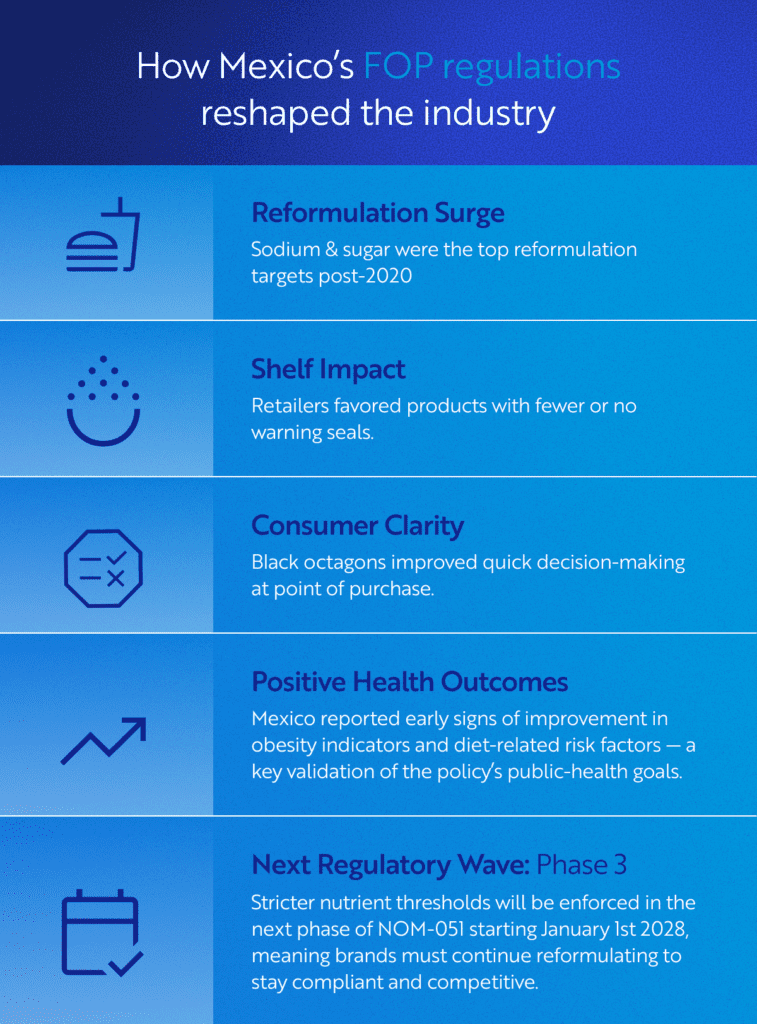
As more countries consider similar measures, this shows how quickly regulatory shifts can transform the food landscape. Governments worldwide are prioritizing nutritional transparency, and the brands that anticipate these changes will be the ones that protect their portfolios and maintain competitiveness. Investing early in sodium reduction and smart reformulation is no longer reactive, it’s strategic.


San Francisco sues 10 companies that make ultraprocessed food
San Francisco has filed lawsuits against several major food companies, arguing that ultra-processed products contribute to rising rates of obesity and chronic disease. This highlights the growing shift in public policy: governments are holding manufacturers directly accountable for the nutritional quality of their products.

A sour situation for US sugar market
Shoppers are steadily moving away from high-sugar products, driven by rising awareness of metabolic health, weight management, and long-term disease prevention.

Diet Trends to Watch in 2026
Emerging diet trends show that shoppers are becoming far more intentional about their health, prioritizing metabolic wellness, gut health, and cleaner ingredient lists.

Probiotics: Consumer preferences driving change
Shoppers are no longer reacting to health issues, they’re proactively adjusting their lifestyles, seeking foods that support digestion, immunity, and long-term well-being.