

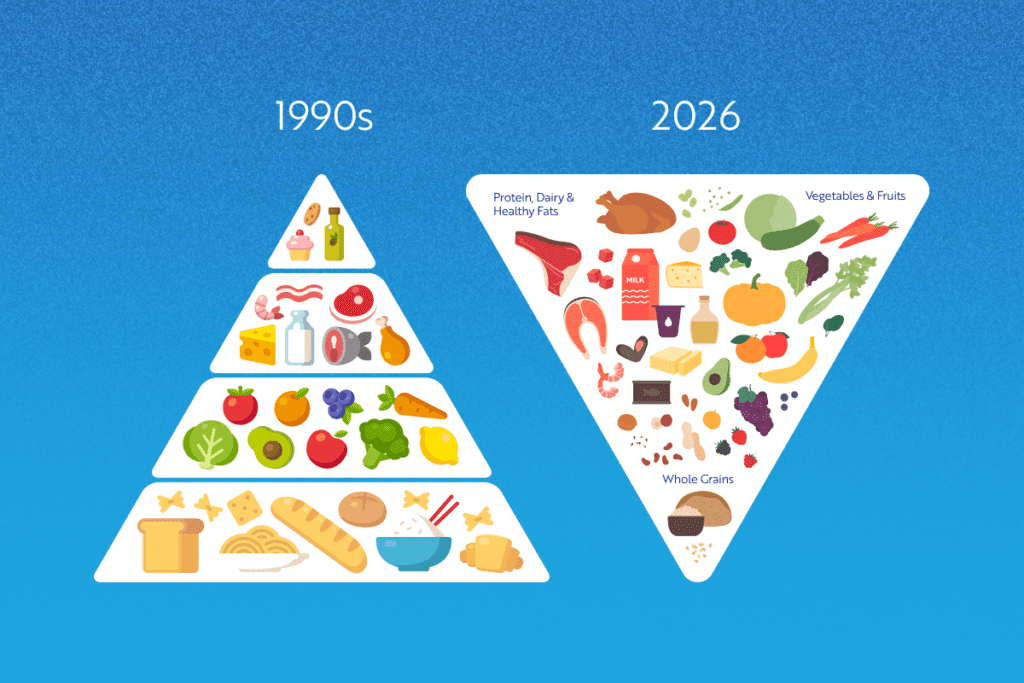
On January 7, 2026, the USDA and HHS unveiled a streamlined 10-page guide with a clear mandate: “Eat Real Food”. The new visual framework includes an inverted pyramid that prioritizes whole proteins, dairy, and vegetables at the widest section, while grains now represent a smaller portion of the recommended diet.
For the first time, federal guidelines explicitly urge avoiding “highly processed” packaged, ready-to-eat salty foods like chips and crackers. This isn’t just a suggestion—it’s the new baseline for federal feeding programs (SNAP, school lunches) affecting millions of consumers.
This change showcases the “forever evolution” of our industry. To maintain relevance, brands must anticipate changes in consumer choices and regulatory resets. Reducing sodium is no longer just a “clean label” goal; it is a survival strategy to move your products from the “avoid” list back into the consumer’s basket.


Consumer trends amidst economic uncertainty
Shoppers are no longer just looking for the lowest price; they are seeking tangible value. For the snack industry, this means products must justify their place in the basket with “cleaner” profiles.

The AI revolution sweeping food and drink
AI is now being used for precision demand forecasting and recipe tweaks based on real-time sales data to slash waste.
Food in flux: the trends to shape buying habits in 2026
Artificial intelligence is reshaping how consumers discover, compare, and select food products: from personalized nutrition recommendations to automated health scoring in retail.

Five trends driving flavor innovation
Innovation is pivoting toward five key pillars: Sensory Therapy, Authentic, Taste Adventures, Healthier Enjoyment, and Quality. MicroSalt® allows brands to tackle the “healthier enjoyment” demand by delivering full flavor with 50% less sodium.